From Planning Panic to Travel Joy: A Calmer Trip
Why Travel Planning Can Feel Overwhelming
Travel planning asks you to make many choices before you know exactly how the trip will unfold. You may be comparing prices, coordinating schedules, and trying to picture a place you have never visited. Add a deadline or a limited budget, and even enjoyable choices can begin to feel demanding.
There is also the pressure to make the most of your time away. You might worry about picking the wrong neighborhood, missing an attraction, or forgetting something important. Those concerns do not mean you are bad at planning; they may simply mean you have a lot to sort through.
Start with a decision that makes the next one easier. Choosing your travel dates, for example, can narrow down transportation and accommodation options. A manageable plan does not need to be a perfect itinerary.
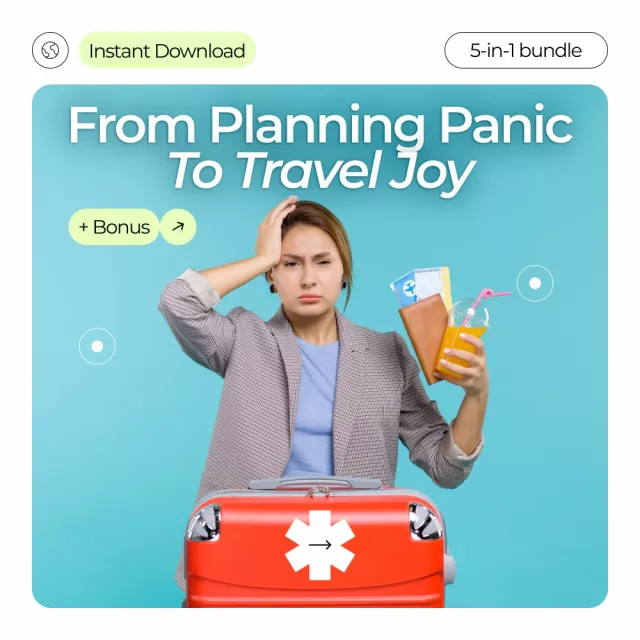
Meet the From Planning Panic to Travel Joy Bundle
Our From Planning Panic to Travel Joy 5-in-1 Bundle is a travel-planning resource centered on stress and overwhelm. It is an option if you want to bring more structure to your trip preparation without expecting a perfect itinerary.
You can use it alongside your own planning habits. Set aside a few minutes at a time, or work through your decisions in a longer session with breaks. Our team encourages you to choose a pace that fits your trip and the time you have available.
Featured in this guide
from-planning-panic-to-travel-joy-5-in-1-bundle-to-beat-travel-stress-overwhelm
A Simple Plan for a Calmer Departure
Begin with your budget, preferred dates, and a general destination. Decide what matters most to you, whether that is convenience, a particular experience, or time with travel companions. These boundaries can help you compare options without researching everything.
Next, handle essential bookings before filling in smaller details. Keep confirmation numbers, addresses, and important contact information together somewhere you can access them when needed.
- Before booking: Set your budget and preferred dates.
- After booking: Record transportation and accommodation details in one place.
- Before departure: Make a short packing list and check your travel documents.
- During the trip: Leave open time between planned activities.
For a last-minute getaway, focus on the essentials first. For a longer trip, you can spread these decisions over several weeks.
Make Space for the Joy of Travel
Preparation is not only about avoiding problems. It is also a chance to notice what you are looking forward to. Pick one experience that feels meaningful to you, whether that is a scenic walk, a favorite meal, or an unhurried morning somewhere new. You do not have to fill every hour to make a trip worthwhile.
If you are heading out by car, The Road Trip Routes Handbook is another resource to consider as you plan your journey. Think about where you would like to stop, how long you want to drive each day, and where a little extra time could make the route feel more comfortable.
We invite you to explore the bundle and prepare at a pace that works for you. A little structure, a little flexibility, and something to look forward to can give your trip a welcoming start.
If anxiety is affecting your everyday life, the National Institute of Mental Health’s guide to anxiety disorders offers information about symptoms and finding help.
FAQ
Why does planning give me anxiety?
Uncertainty, decision fatigue, and pressure to get everything right can contribute to anxiety, though everyone’s experience is different. Try breaking your plans into smaller steps, and consider professional support if anxiety disrupts your daily life.
How to deal with an oncoming panic attack?
If you can, move to a safe place, breathe slowly, and remind yourself that panic symptoms can pass. If symptoms are new, severe, or could be a medical emergency, seek urgent medical help.
What is the 3-3-3 rule of anxiety?
It is an informal grounding exercise: notice three things you can see, three sounds you can hear, and move three parts of your body. It may help some people refocus, but it is not a treatment for anxiety.
What is the difference between an anxiety attack and a panic attack?
A panic attack is a sudden surge of intense fear or discomfort with physical or emotional symptoms. “Anxiety attack” is not a formal diagnosis and is often used to describe escalating anxiety, so its meaning can vary.
See if from-planning-panic-to-travel-joy-5-in-1-bundle-to-beat-travel-stress-overwhelm fits your setup